

Movement and Repose
The Practice of Gnosis

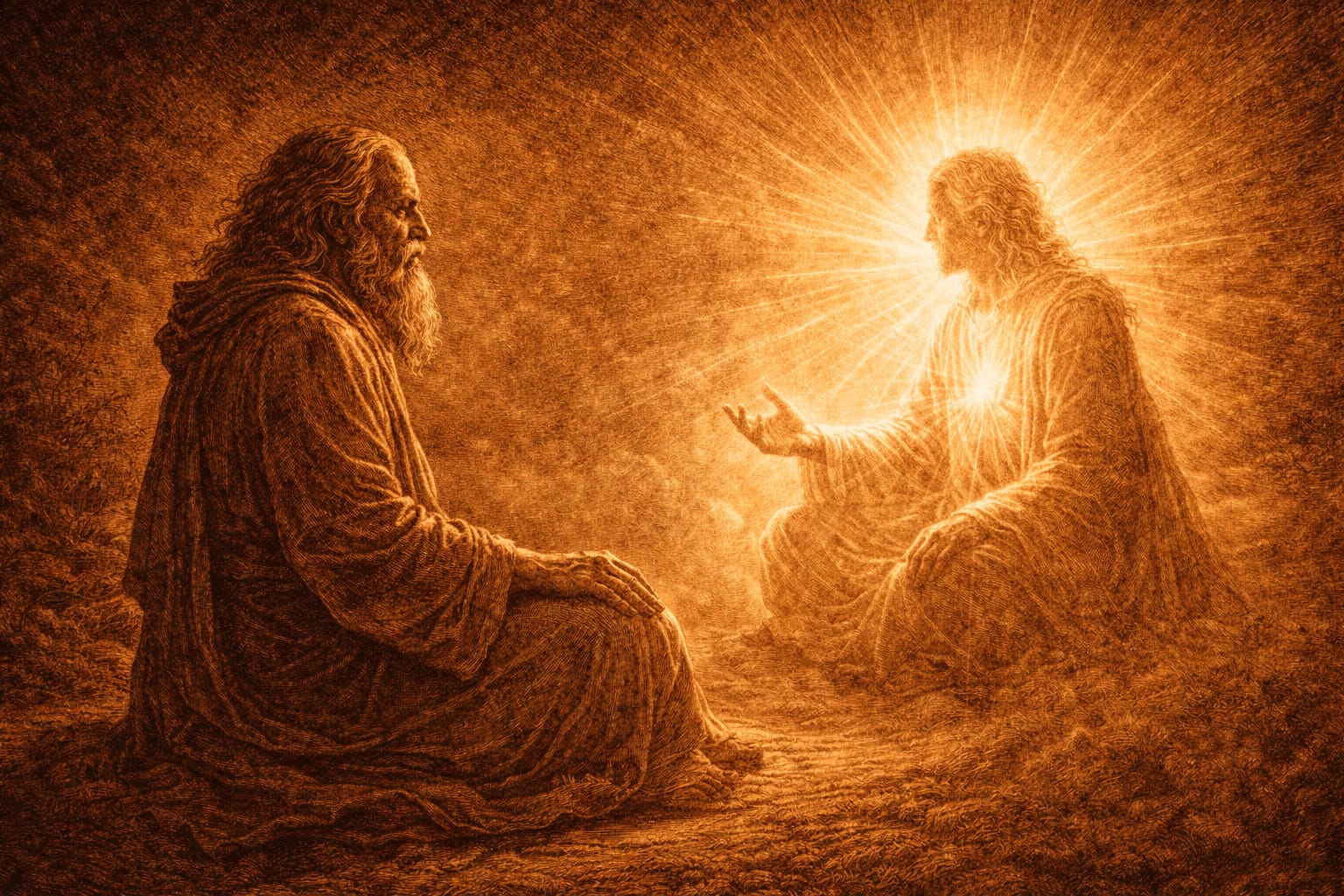
Note on Sources: This essay explores meditation through the Gospel of Thomas, an early Christian text discovered at Nag Hammadi in 1945 that emphasizes direct inner experience and gnosis (knowledge through direct perception) rather than institutional authority. Alongside this ancient voice, we engage with Hermetic philosophy from the Corpus Hermeticum (2nd-3rd century CE texts describing reality as emanating from Divine Intellect), Neoplatonic philosophy (3rd-6th century CE) which systematizes the same ontology, particularly Plotinus's Enneads describing theoria (contemplation) as active intellectual vision and the soul's ascent through emanation. And Carl Jung's depth psychology, particularly his method of active imagination documented in The Red Book, through which he discovered that genuine inner work requires both receptive stillness and active dialogue with autonomous contents of the psyche.Originally written in Swedish; translated and edited for clarity in English.
You sit down to meditate. Again.
You’ve read the books, you know you should do this, you understand intellectually why it matters. You close your eyes. You try to focus on your breath. Thoughts immediately flood in, that conversation from yesterday, work deadline looming. You notice you’re thinking. You return to the breath.
Three seconds later, you’re planning dinner.
You return to the breath. Now you’re judging yourself for being bad at this. Return to breath. Why is everyone else able to do this and you can’t? Return to breath. This is boring. Return to breath. How long has it been? You check the timer. Two minutes.
You've failed again, you think.
I know this frustration intimately. Years of sitting, years of “failing,” convinced I was just bad at this. Except I hadn't failed. The problem was that almost everything I'd been told about meditation misunderstood what consciousness really is, what I am, and what meditation actually does. Most meditation instruction treats the mind as a machine to be controlled, thoughts as obstacles to overcome, and inner peace as a state to achieve through proper technique. Follow the steps, apply the method, get the result. Works for building a bookshelf. Fails spectacularly for exploring consciousness because it ignores the actual structure of reality and your place within it.
The Confrontation Jung Couldn’t Avoid
Carl Jung didn’t set out to revolutionize meditation practice. As a psychiatrist trained in the rigorous methods of early 20th-century science, he had every reason to stick with conventional approaches.
But between 1913 and 1916, something forced his hand.
He found himself in what he later called his “confrontation with the unconscious”, a period he documented in what would become The Red Book. What Jung discovered during those years wasn’t meditation as it’s typically taught. Not sitting peacefully, watching thoughts pass like clouds, achieving inner calm. Something far more demanding and far more terrifying. He called it “active imagination.”
In The Red Book, he wrote: “The spirit of the depths forced me to speak to my soul, to call upon her as a living and self-existing being.”
When I first read this, it sounded insane. A scientist talking to his soul as if it were a separate being? But Jung wasn’t being poetic. One of the 20th century’s most influential psychologists was forced, by inner necessity, not external authority, to treat his own soul as a real, autonomous presence with which he could dialogue. Recognition that the psyche contains figures, presences, entire landscapes of meaning that cannot be accessed by merely thinking about them.
They must be encountered.
Jung’s method required two movements that most meditation practices keep separate. First, receptive stillness: sitting quietly, allowing the mind to settle, creating space for what lies beneath ordinary consciousness to surface. This is the part that looks like traditional meditation. Second, active engagement: when autonomous contents arise, you don’t just watch them pass. You engage them directly. You ask questions and listen to answers, you dialogue.
In his work, Jung explained: “To the extent that I managed to translate the emotions into images. That is to say, to find the images which were concealed in the emotions, I was inwardly calmed and reassured.”
The emotions were presences seeking expression, autonomous aspects of the psyche that needed engagement. Not suppression. Not passive observation. This work terrified him. He encountered his shadow, met his anima as an autonomous figure, witnessed archetypal presences that challenged everything he thought he knew about the structure of the self. At times, he questioned his sanity.
But he continued because what he discovered was that these autonomous contents weren’t pathological. They were the normal structure of the psyche when you actually explore it. The World Soul level of emanation made accessible through inner work.
Drinking from the Crater
What Jung discovered through psychological method, the ancient Hermetic tradition had known as ontology. Book X of the Corpus Hermeticum describes reality as emanating from Divine Intellect through hierarchical levels. You exist as a microcosm containing all these levels: Nous (divine intellect), Psyche (soul), and Soma (body).
What you call “I”, your consciousness, participates in all levels simultaneously, though ordinary awareness identifies primarily with the lower levels.
Book IV of the Corpus Hermeticum describes meditation through a specific image. It speaks of the Crater: a great mixing bowl filled with Nous, divine Mind. “He filled a great bowl with it [Mind/Nous] and sent it down, joining to it a Herald, and bade him make proclamation to the hearts of men: ‘Baptize thyself with this bowl’s baptism, what heart can do so.’”
The Crater is offered, but you must choose to drink from it. You must actively immerse yourself in higher consciousness through intentional practice. Some do. Most don’t. The bowl is there.
Meditation is the act of drinking from it.
But what does drinking from the Crater actually mean? Book X gives us the answer in its description of the contemplative state: “For Gnosis of the Good is holy silence and a giving holiday to every sense.” It continues: “Neither can he who perceiveth It, perceive aught else; nor he who gazeth on It, gaze on aught else; nor hear aught else, nor stir his body any way. Staying his body’s every sense and every motion he stayeth still.”
Receptive stillness: the settling of ordinary consciousness that creates space for what lies at deeper levels to surface.
You quiet the body’s senses, you cease external motion, you create stillness. This is drinking from the Crater: actively choosing to immerse consciousness in a state where the nous level can become perceptible.
Movement and Repose
The Gospel of Thomas adds something crucial. When asked for the sign of the Father within, Jesus replies: “It is movement and repose.”
Both. Simultaneously.
Repose is the receptive stillness that Book X describes: the settling, the holy silence, the giving holiday to every sense. This creates the space. But movement is what Jung discovered when he engaged the autonomous contents that arose. When figures appeared, when emotions surfaced, when presences made themselves known, he didn’t just observe them passing.
He actively engaged them in dialogue.
Plotinus, writing in the 3rd century CE as Neoplatonism systematized what the Hermetic texts described, called this practice theoria: contemplation. For Plotinus, contemplation wasn’t passive observation. It was active intellectual vision, the soul turning inward to engage directly with Nous. He described the soul “conversing” with the divine intellect, ascending through levels of emanation through engaged participation.
Jung, fifteen centuries later, independently rediscovered the same method through clinical work.
Active imagination and Plotinian contemplation describe the same practice: receptive stillness combined with active engagement, movement and repose, ascending through the levels of emanation you contain. Understanding this transformed my practice completely. I’d been doing half the work: the stillness without the engagement, wondering why nothing seemed to shift. This is drinking from the Crater with both hands: receptive opening to what exists at deeper levels of emanation, and active participation with what emerges.
You settle into stillness, observing the breath, allowing ordinary consciousness to quiet. When autonomous content arises, when emotion seeks expression or images appear, you engage it.
You ask what it wants to show you. You let it reveal itself as figure or form. You dialogue. Not daydreaming where ego invents content. Intentional, engaged participation with what arises autonomously from the psyche level, the World Soul level you contain as a microcosm. The images and figures are already there, autonomous presences at the psyche level of emanation, operating whether you acknowledge them or not.
Active imagination brings them into conscious relationship. Jung discovered this empirically. Plotinus described it philosophically. The Hermetic texts framed it ontologically: the World Soul is a real level of emanation, and humans as a microcosm contain this level.
Inner work accesses it.
Thomas knew this. Logion 70 states: “If you bring forth what is within you, what you have will save you. If you do not have that within you, what you do not have within you will kill you.” Existential urgency. What is within you must be brought forth. It cannot stay repressed or ignored or passively observed. It must be engaged, dialogued with, integrated.
The practice moves naturally between the two poles. Settle into stillness. Observe breath, allow consciousness to quiet, create receptive space. When autonomous content arises, engage it. Ask questions and listen to responses. Translate emotions into images, as Jung did, then return to stillness, integrating what emerged.
Movement and repose embodied.
You’re learning to inhabit both simultaneously, resting in awareness while engaging what arises within that awareness. You’re ascending through the levels you contain: working at the psyche level to access the nous level, drinking from the Crater to reunite with Divine Intellect. Plotinus called this the ascent to The One. Jung called it individuation. The Hermetic texts call it regeneration. Same journey through different vocabularies.
What You’ll Actually Meet
Book X is brutally honest about what happens when you drink from the Crater. The text acknowledges that not everyone can bear it. Some receive more Nous than others through their own capacity and willingness.
Most meditation guides lie by omission.
They tell you about the benefits without mentioning what you’ll actually encounter when you stop distracting yourself and look inward. You’ll meet what you’ve avoided. Shadow material surfaces. Repressed emotions demand expression. Uncomfortable truths become unavoidable. The gap between who you think you are and who you actually are opens wide.
Jung encountered terrifying figures during his Red Book work. His anima appeared accompanied by archetypal presences that challenged his entire sense of self. He continued anyway because he recognized that these figures, however terrifying, were autonomous aspects of the psyche level seeking integration. Avoiding them meant remaining fragmented. Engaging them meant becoming whole.
Plotinus knew this too. In the Enneads, he wrote of the necessity of purification before the soul could ascend. Not moral purification through rule-following, but psychological purification through self-knowledge. You must see what you are at all levels before you can consciously participate in the higher levels.
It’s boring at first. Excruciatingly boring. I nearly quit multiple times during those first months. Your mind won’t “clear” the way you expect.
Thoughts continue arising. This is natural: consciousness at the psyche level operates through constant movement. Observing this is observing how the emanation structure actually works at this level. Boredom is the withdrawal symptom from stimulation addiction.
Progress isn't linear. I learned this the hard way. Some sessions feel transcendent. Consciousness expands dramatically, the nous level becomes accessible, gnosis feels immediate. And other sessions felt like torture. Restless, distracted, seemingly pointless. I kept thinking I'd lost whatever I'd gained. Both are part of the natural oscillation between levels.
Expansion and contraction cycle naturally.
Thomas records this understanding: the kingdom spreads out upon the earth, and men do not see it. It’s already here. Already present. We don’t see it because our ordinary consciousness isn’t attuned to perceive it. You’ll question everything. Including meditation itself. Including your identity, including what you thought you knew about reality.
The Gospel of Truth describes ignorance as creating “anguish and terror” that “grew solid like a fog so that no one was able to see.”
When you sit in meditation, the fog becomes visible as fog. You see your own not-seeing. That’s psychologically uncomfortable. The ego experiences the dissolution of its certainties as threat.
Jung questioned his sanity during his Red Book work. He wondered if he was descending into psychosis. The autonomous figures seemed too real, too independent of his conscious will. But he had the scientific honesty to recognize that this was the normal structure of the psyche becoming visible when you actually look. The World Soul level operates through autonomous presences. Ontology, not delusion.
Why most people don’t practice: reading about meditation is comfortable. Watching videos about meditation is comfortable, discussing meditation philosophically is comfortable.
Actually sitting with your own consciousness for fifteen minutes, actually encountering the psyche level directly, is profoundly uncomfortable. You can accumulate endless knowledge about inner work without ever doing it.
When Consciousness Shifts
If you practice consistently, both the receptive settling and the active engagement, consciousness begins to operate differently. Over weeks, thoughts lose some of their grip. You see them as movements at the psyche level instead of taking them as reality itself.
Emotions become workable, still present, still felt, no longer overwhelming. You’re learning to navigate the psyche level.
Over months, something deeper shifts. Active imagination becomes more accessible. The autonomous contents that were initially difficult to perceive or engage become clearer, more responsive. Thomas sayings start making experiential sense, direct recognition instead of intellectual understanding. Book IV’s image of drinking from the Crater becomes lived reality. Plotinus’s descriptions of ascending to Nous become comprehensible through experience.
You’re actually accessing the nous level.
Over years, direct gnosis. Knowing. What the Corpus Hermeticum describes as immersing yourself in Nous becomes your actual experience. You know yourself as a microcosm containing all levels of emanation through sustained direct perception. The kingdom spreads out upon the earth, and you finally see it. Not because it appeared but because the obscurations dissolved.
Book X speaks of souls that ascend through transformation, eventually reaching the level of divine intellect. Plotinus described the same ascent in the Enneads: the soul recognizing its participation in Nous, then ascending to union with The One.
Description of consciousness transformation available now, through the practice of drinking from the Crater. Through meditation that combines receptive stillness with active engagement, repose and movement, settling at the psyche level to access the nous level.
Already Here
Thomas: “The kingdom of the Father is spread out upon the earth, and men do not see it.”
The kingdom isn’t hidden in some secret location or distant realm. It’s already here. Already present in you as the nous level you contain as a microcosm. We don’t see it because we’re looking for it when we should be looking from it. Searching outside when we already contain what we seek.
Meditation is learning to see from the kingdom.
You are a microcosm. You contain all levels of emanation: soma, psyche, nous. You are already structured as the cosmos in miniature. The work: recognizing what has always been the case. This recognition doesn’t come through belief. Book X, Plotinus’s Enneads, Jung’s documentation, Thomas’s sayings all point toward the same necessity: direct experience.
Gnosis. Knowledge through immediate perception of reality’s nature.
Reality flows from THE ALL through Nous through Logos through World Soul through matter. You contain this entire structure. Meditation, both receptive stillness and active engagement, both repose and movement, is the practice of ascending through the levels you contain, from identification with soma through integration of psyche to reunion with nous.
Most people won't do this. The inertia is enormous. The ego's resistance is sophisticated. I almost gave up more times than I can count. Ordinary consciousness operates at a level where subtler dimensions remain imperceptible without sustained practice.
I share this not as someone who's “arrived” but as someone still walking the path. For those who continue: sit.
Settle into stillness. Observe thought arising and dissolving, the psyche level in motion. When autonomous content emerges, engage it. Ask questions. Listen. Translate emotions into images, as Jung did, as Plotinus described. Dialogue with what arises, then return to stillness, allowing integration.
Repeat.
This is drinking from the Crater. Movement and repose. Gnosis becoming experience.
The bowl is offered. You already contain all levels. The choice is ascending through them or remaining identified with the lowest. The kingdom is already spread upon the earth, already present in you as a microcosm.
Meditation is learning to see it.