The Kingdom Within
On Seeking Inner Truth

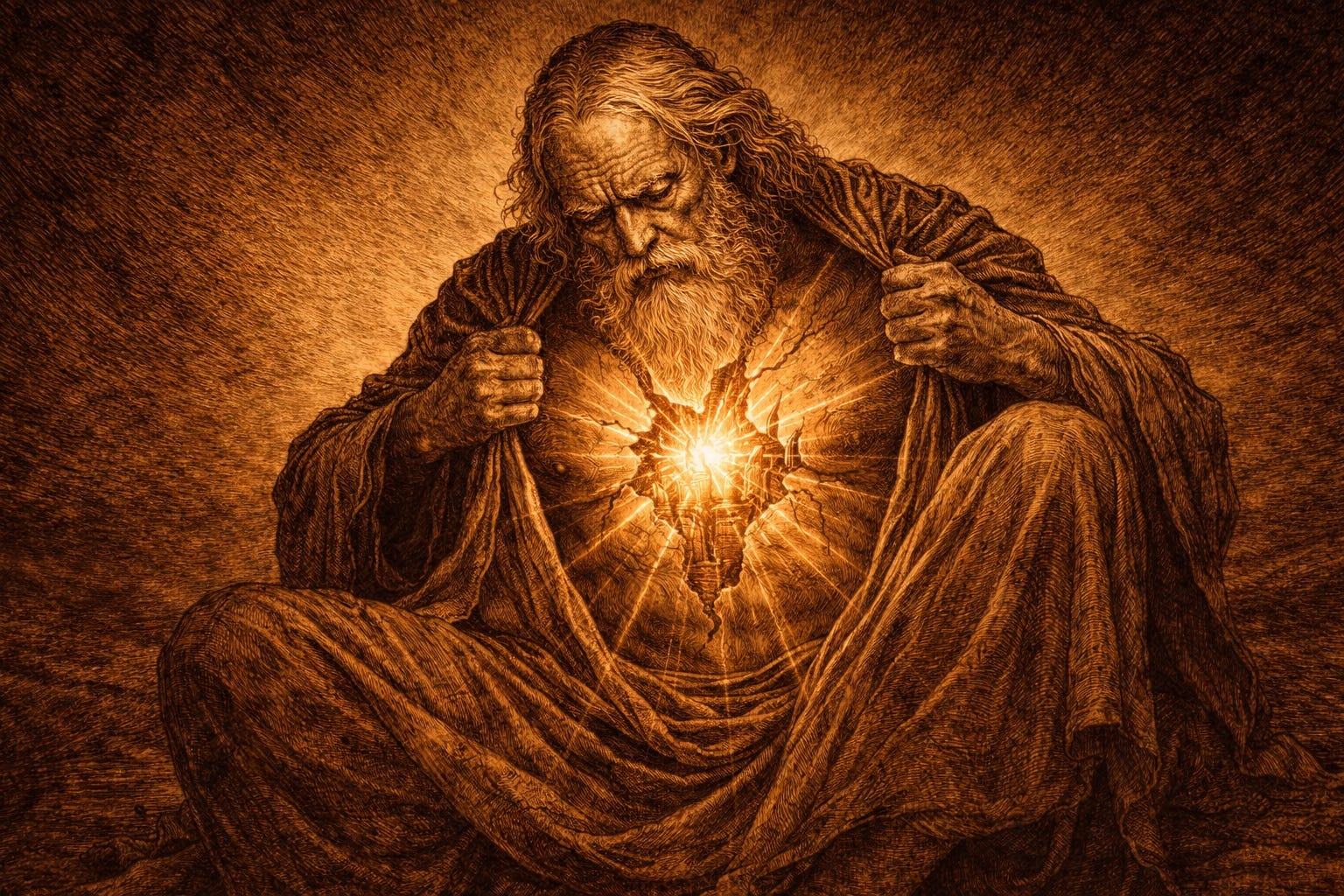
Note on Sources: This essay explores early Christian texts that existed alongside what became orthodox Christianity—the Gospels of Thomas, Mary Magdalene, Philip, and others found at Nag Hammadi in 1945. These texts emphasized direct inner experience and gnosis (knowledge through direct perception) rather than institutional authority. Alongside these ancient voices, we’ll engage with classical Hermetic philosophy—particularly the Corpus Hermeticum (2nd-3rd century CE texts describing reality as emanating from Divine Intellect) and Neoplatonic philosophy (3rd-6th century CE), which systematizes the same ontology. We’ll also draw on Carl Jung’s depth psychology, which recognized in these traditions a universal human journey toward wholeness.We’ve been taught to look elsewhere.
From childhood, the pattern is established: answers come from outside. From parents, teachers, priests, books, experts. When we face existential questions—Who am I? What is real?—we instinctively turn outward. We read another book, attend another lecture. We wait for someone with credentials or charisma to hand us the truth we’re missing.
This is what conditioning is. And for practical matters—how to fix an engine, calculate compound interest, diagnose an illness—it works perfectly well. But for the deepest questions, the ones that actually matter, this outward gaze becomes a trap. We accumulate knowledge about truth while the direct experience of truth recedes further into the distance. We become collectors of maps, never noticing we’ve forgotten how to walk.
The tragedy is that we do this even in spiritual seeking. We trade one external authority for another, one set of doctrines for a slightly different set. We call it growth. We call it the path. But we remain fundamentally in the same position: looking outside ourselves for what can only be found within.
The Scientific Witness
Carl Jung understood this trap. As a young psychiatrist trained in the rigorous methods of early 20th-century science, he had every reason to trust external, empirical investigation. His career depended on observable data, replicable results, peer review.
Yet something in his work with patients—particularly their dreams, their symbols, their inexplicable moments of transformation—pointed toward a dimension that his scientific methods couldn’t fully grasp.
What Jung did next is remarkable not because it was mystical, but because it was honest. He recognized that to truly understand the human psyche, he would have to explore his own depths with the same seriousness he brought to his patients. Between 1913 and 1916, he undertook what he later called his “confrontation with the unconscious”—a deliberate descent into his inner world that he documented in what would become The Red Book (Liber Novus).
In that work, he wrote: “The spirit of the depths forced me to speak to my soul, to call upon her as a living and self-existing being.”
Read that again. One of the 20th century’s most influential psychologists was forced—not by external authority but by inner necessity—to treat his own soul as a real, living presence with which he could dialogue. This was recognition that the deepest truths require a turning inward that rational analysis alone cannot accomplish.
Jung discovered through this process what mystics and gnostics had known for millennia: that within the psyche exist autonomous figures, archetypal presences, entire landscapes of meaning that cannot be accessed through mere thinking about them. They must be encountered. And that encounter happens not in books or lectures, but in the intentional exploration of one’s own inner territory. Jung remained a scientist, continued to write, teach and analyze. But he had proven to himself—and demonstrated to anyone willing to look—that the scientific method has limits. Some truths can only be verified through direct, inner experience. If you want to understand the soul, you must speak to your soul.
Ancient Voices, Same Truth
When Jung explored the gnostic texts that were being rediscovered in his time, he recognized immediately what he had found in his own depths. These weren’t curious historical artifacts. They were maps of the same territory he had walked.
The Gospel of Thomas, likely dating to the first or early second century, opens with a radical claim: “Whoever finds the interpretation of these sayings will not experience death.” Not “whoever believes correctly” or “whoever follows the proper rituals.” Whoever finds the interpretation—meaning, whoever does the inner work of understanding, whoever turns these words over in consciousness until their meaning reveals itself from within.
In Logion 3, Jesus says: “The kingdom is inside of you, and it is outside of you. When you come to know yourselves, then you will become known, and you will realize that it is you who are the sons of the living Father.”
The kingdom—meaning the direct experience of divine reality—isn’t a distant heaven or future event. It’s a present condition, existing both “inside and outside” because the distinction between them is not what we think. But it requires self-knowledge. Not knowledge about yourself—your personality, your history, your preferences—but knowledge of yourself as you actually are beneath the constructed identity.
The text becomes even more direct in Logion 70: “If you bring forth what is within you, what you have will save you. If you do not have that within you, what you do not have within you will kill you.”
What is within you—not planted there by teaching but already present, waiting to be brought forth—is quite literally salvific. Its absence is not neutral. It’s lethal. This is existential urgency. You cannot outsource this. No external savior can hand you what you must discover and bring forth yourself.
But why can’t external teaching just give us the answer directly? The Gospel of Philip:
“Truth did not come into the world naked, but it came in types and images. The world will not receive truth in any other way.”
Truth is too direct, too overwhelming for ordinary consciousness. It must come clothed in symbol, metaphor, story. The symbols are not themselves the truth. They’re vehicles. And the destination they point toward is always inward.
Reality as Emanation from Divine Intellect
These texts converge on a central claim: truth is within because of how reality is actually structured.
The ancient Hermetic tradition understood this. Book X of the Corpus Hermeticum, titled The Key, states it with remarkable directness: “The kosmos is in God, contained by Him as thoughts are contained in a mind.”
This describes panentheism: all reality exists within the Divine Intellect (Nous), but Nous is more than its contents. The cosmos is real, objective, ordered—but it exists within and emanates from a source that is itself pure intelligence. What Book X describes is emanation. Reality flows from THE ALL—the ineffable source beyond description—through hierarchical levels of increasing density. First comes Nous itself, Divine Intellect, which is pure intelligence and intelligibility. From Nous emanates Logos, the Creative Word, which is Nous expressed as organizing principle. From Logos flows the World Soul, the intermediate psychic realm that connects the intelligible and the material. Finally comes the material cosmos itself, the lowest and densest emanation, furthest from the source but still real, still ordered, still containing the divine pattern that makes it knowable.
This is the same structure that Neoplatonism—Plotinus writing in the third century CE, contemporary with the Hermetic texts—systematizes philosophically. Plotinus describes The One emanating into Nous, Nous into Soul, Soul into Matter. Each level flows from the previous like light from the sun or warmth from fire. Lower levels are contained in higher not as illusions but as increasingly dense manifestations of the same reality.
Poimandres, the opening book of the Corpus Hermeticum, describes this: “Mind, the God, being male and female, as life and light, brought forth by the Word another Mind, the Creator.” Nous brings forth Nous through emanation. The Creator-Mind that shapes physical reality is itself an emanation from Divine Intellect. The entire cosmos flows from this source through graded levels, all objectively real, all intelligibly ordered because they all share the same origin in Nous. Matter is simply the furthest emanation from the source—densest and most removed from origin, but still containing the divine order that makes it comprehensible. As Asclepius states: “Nothing is separate from the system of order. This world is perfect, in every respect! Indeed, this world is conveyed with order, and the entirety of it is established from order.” The material world is the natural endpoint of emanation, still participating in the intelligible structure of reality even at its densest level.
The Human as a Microcosm
Book XI of the Corpus Hermeticum teaches: “The beginning of piety is to know God; but he who knows himself will get the knowledge of God.”
Why does self-knowledge lead to knowledge of God?
Because humans contain all levels of the emanation hierarchy within themselves. You are a microcosm—the entire universal structure in miniature. Within you exists Nous, your share in Divine Intellect. Within you exists Psyche, your soul with its emotions and individual thoughts. Within you exists Soma, your body, your material form. You literally contain the whole cosmic emanation as your own structure. Neoplatonism demonstrates this systematically: the human being participates in all levels—divine intellect, world soul, and matter. You are where all levels converge, where the macrocosm becomes microcosm.
The Emerald Tablet’s famous principle expresses this: “As above, so below; as below, so above.”
This is why “the Kingdom is within”—and outside. Thomas’s saying makes perfect sense: “The kingdom is inside of you, and it is outside of you.” The kingdom is “inside” because you contain the entire emanation structure as microcosm. When you explore your deepest self, you’re exploring nous and the patterns that organize all reality. The kingdom is “outside” because the cosmos itself emanates from the same source, ordered by the same Logos.
Both are real and both arise from THE ALL.
You discover the kingdom through knowing yourself because you are the cosmos in miniature. Self-knowledge reveals cosmic structure because the same structure exists at all scales. The patterns you find in your deepest self are the same patterns that organize stars and atoms, because all emanate from the same intelligent source.
Gnosis as Ascent Through Levels
Gnosis begins with recognizing your true nature. You are not merely soma, not merely physical form. You contain all levels of reality within yourself. The process starts in ignorance—what the Hermetic texts call agnoia—when you identify only with the lowest level while forgetting your divine origin.
Awakening happens when you recognize the nous within you, your share in Divine Intellect. And start recognizing what was always there but obscured by identification with lower levels.
Book XIII, the Secret Sermon on the Mountain, describes regeneration through this recognition. Transformation happens through direct knowledge of what you actually are. As you recognize yourself as containing all levels, consciousness can ascend through those levels: from identification with body through integration of soul to realization of divine intellect to reunification with THE ALL.
Book IV describes this as “drinking from the Crater”—the great bowl filled with Nous that was sent down for those who choose to immerse themselves: “He filled a great bowl with [Mind/Nous] and sent it down, appointing a herald, and bade him make proclamation to the hearts of men: ‘Baptize thyself with this bowl’s baptism, what heart can do so.’”
This is meditation, contemplation, inner work. Ascending through the emanation levels you already contain to reunite with the divine intellect at your core. The bowl is offered to everyone. Some choose to drink. Most don’t.
The cosmos is intelligible because it emanates from intelligence. You can know it because you participate in that same intelligence. Your nous is connected to, is part of, the Divine Nous that orders all things. When Book X describes the soul transformed through gnosis “ascending,” it means consciousness rising through the emanation levels it contains: from identification with body through soul to intellect to THE ALL.
The Gospel of Mary’s Authority
The Gospel of Mary Magdalene adds a crucial dimension: the conflict between direct revelation and institutional authority. When Mary shares her vision of the Savior’s teaching, Peter challenges her: “Did he really speak with a woman without our knowledge and not openly? Are we to turn about and all listen to her? Did he prefer her to us?”
Levi’s response cuts through: “If the Savior made her worthy, who are you indeed to reject her?”
Direct gnosis trumps hierarchy. Mary’s inner experience of truth—her ascent through the powers, her direct knowing—cannot be invalidated by Peter’s institutional position. Your direct encounter with reality, your own ascent through the levels you contain as a microcosm, has authority that no church, tradition or external expert can override. They can offer context and share their experiences. The traditions are valuable. Teachers matter. But they cannot tell you that what you have genuinely perceived through inner gnosis is invalid because it doesn’t fit their system. Mary encountered truth directly. Her experience stands on its own authority.
The Practice: Turning Inward
Jung called his method “active imagination”—a deliberate opening to the autonomous contents of the psyche, allowing figures and images to arise and engaging them in dialogue.
This works because psyche is a real level of emanation, intermediate between body and nous. The figures you encounter are autonomous presences at the psyche level, which you access by turning inward from the surface level of ordinary consciousness.
The gnostic texts suggest something similar. Mary’s vision involves the soul ascending through powers—Darkness, Desire, Ignorance, Wrath—learning to recognize and transcend each. This is a map of what you encounter when you genuinely go inward through the levels you contain: shadow aspects at the psyche level, attachments, fundamental not-knowing, defensive patterns guarding the false self. Jung wrote about encountering his own shadow, his anima, terrifying figures that challenged his sense of self. The gnostic texts speak of “anguish and terror” born of ignorance. When you stop distracting yourself with external seeking and actually explore inward through the levels you contain, you meet what you’ve been avoiding.
You must go through psyche to reach nous. You must integrate shadow before you can embody light. The Gospel of Truth describes ignorance creating a fog “so that no one was able to see.” You must see clearly at each level before ascending to the next. The work of bringing unconscious contents to consciousness, of integrating what you’ve denied, of recognizing the autonomous presences at the psyche level—this is necessary passage.
The kingdom is already here, already present in you as your own structure. But you can’t see it while identified only with the body level, while unaware of the psyche and nous levels you also contain. Book X describes the process: “For Gnosis of the Good is holy silence and a giving holiday to every sense.” You quiet the body’s demands, you settle the psyche’s turbulence, you create space for nous to reveal itself. Not by suppressing or escaping lower levels, but by recognizing them as levels and ascending through them.
The Work Begins Within
Thomas records Jesus saying: “The kingdom of the Father is spread out upon the earth, and men do not see it.”
The kingdom isn’t hidden. It’s already here. We don’t see it because we’re looking for it rather than from it—searching outside when we’re already standing in, and as, the middle of what we seek.
This is the great reversal that gnosis requires: not acquiring something new, but recognizing what has always been the case. Not adding knowledge, but removing the obscurations that prevent direct seeing. Jung discovered this in his Red Book journey. The gnostic authors discovered it in their direct experience. The Hermetic philosophers knew it: we are microcosms containing all emanation levels, and to know ourselves at every level is to know the structure of reality itself.
The work ahead is to verify this through your own experience—to turn inward with the rigor Jung brought to his confrontation with the unconscious, to seek with the urgency Thomas implies. To ascend through the levels you contain: recognizing body, integrating psyche, awakening nous, reuniting with THE ALL.
Truth is within you because you’re a microcosm. The kingdom is within and outside because both emanate from the same source, both are real, both are knowable through gnosis. Turn inward—not to escape the world, but to discover the world’s structure within yourself. The path begins within. The truth was always there. You are the cosmos in miniature, and knowing yourself is knowing God.